
Sound and Sensations - Pillars of a Modern Sports Facility
The design of a modern sports facility, regardless of its scale - be it a stadium, multi-purpose arena or sports hall - goes far beyond mere sports architecture and functionality. Sound, image and communication are today the fundamental pillars that determine the success of an event. It's no longer just a matter of ensuring that a match can be played, but of creating a space that provides an unforgettable experience, guarantees the highest level of security and operational efficiency, and maximizes its commercial value. Sound, in particular, has a dual role here: it is a key carrier of atmosphere, raising the excitement level of the audience, but most importantly it is a safety tool that can save lives in a crisis situation.
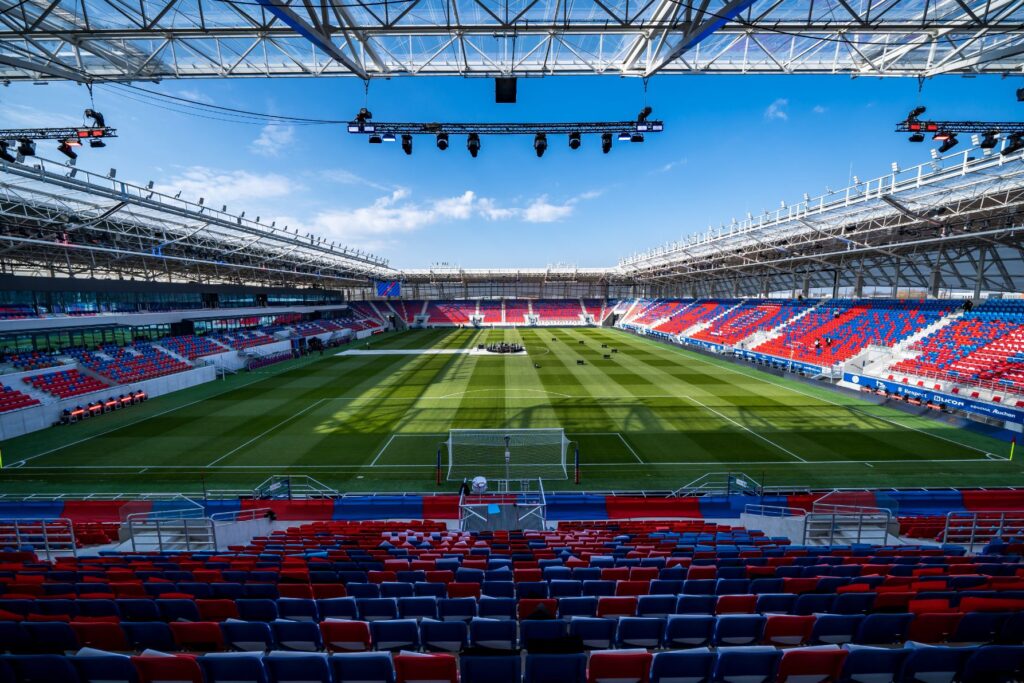
Specifics of Acoustics of Arenas, Stadiums, Playing Fields: Challenges of Unique Scale.
Large sports venues, such as stadiums and arenas, pose unique and extremely difficult acoustic challenges. Their design, relying on large, open spaces and hard surfaces such as concrete, metal and glass, is inherently anti-acoustic. This causes excessive sound reflections, generating phenomena such as long reverberation times and echoes. Reverberation, defined as the persistence of sound in a room after it has ceased, is significantly prolonged under such conditions, resulting in the overlapping of successive words and sounds. As a result, the message becomes „fuzzy” and unintelligible, which poses a serious threat to the effectiveness of messages, especially emergency messages. In addition, on such a large scale, sound spreads unevenly, leading to „dead zones” where sound is barely audible or areas with excessive volume that can be uncomfortable for listeners.
To meet these challenges, advanced solutions are required. A key element is the use of sound-absorbing materials that are suspended from the arena ceiling and effectively reduce reverberation and noise. The market offers specialized panels, such as Signature Baffles and EchoFelt+ Baffles, which withstand the wear and tear typical of dynamic sports environments thanks to their durability. What's more, for multi-purpose facilities that need to accommodate ice competitions, for example, it's crucial to choose moisture-resistant materials. The use of acoustic panels, such as Megasorber, on walls and ceilings is one of the most effective and economical ways to control reverberation on such a large scale.
The Role of Professional Acoustic Analysis and Simulation in Sports Facilities
Given the enormous scale and complexity of acoustic challenges, the design process cannot rely on intuition or experience based on smaller sites. A key step is the professional preparation of an electroacoustic project, which involves a series of steps, starting with defining the objectives and collecting the necessary materials, such as technical drawings and floor plans. Commercial Audio, offers comprehensive preparation of such projects, based on cooperation with the best designers.
Computer simulations are an indispensable tool in this process. Thanks to them, it is possible to check the acoustic qualities of a facility even before construction begins. For example, the Bose Professional Auditioner III Playback System allows you to hear what the sound system will sound like in a given room before even a single speaker is installed. Such simulation allows you to accurately determine the parameters and placement of equipment, minimizing the risk of mistakes and the need for costly corrections during the execution phase. Investing in simulation at an early stage is not only a matter of technical precision, but also a strategic exercise in risk and financial management. Since the costs of changes and adaptations in such large facilities are astronomical, the ability to identify potential problems early and optimize technical solutions translates into real savings across the project. Ensuring that a project meets expectations and standards is not the result of luck, but of precise, data-driven analysis, which is key to the success of any investment.
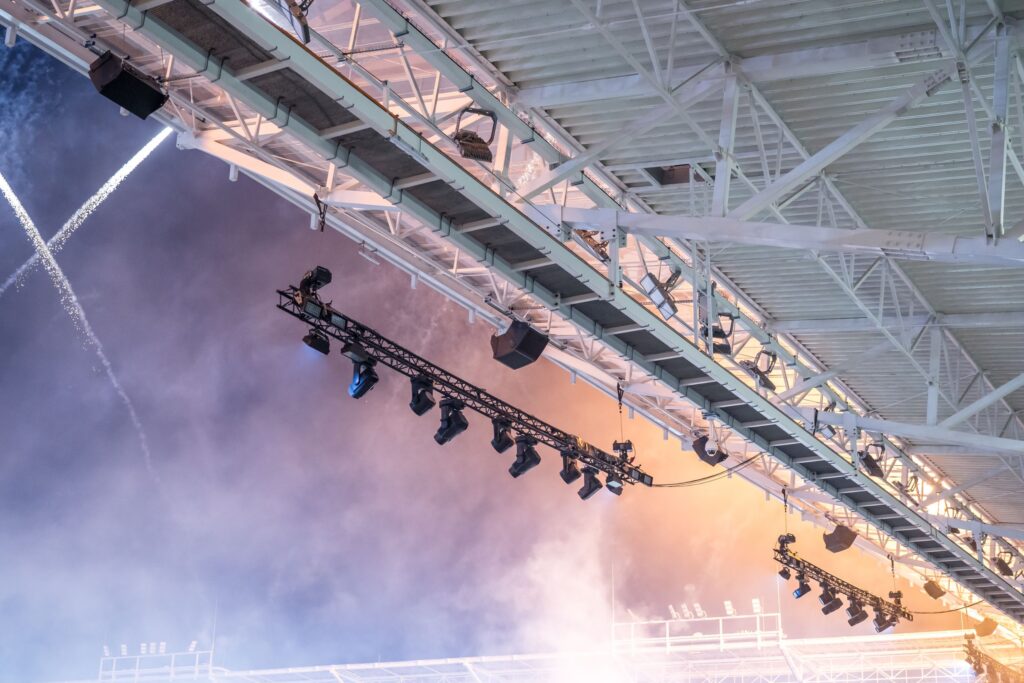
The purpose of a public address system: Security vs. Entertainment
A public address system in a sports facility must fulfill two seemingly contradictory purposes. On the one hand, its primary task is to ensure perfect speech intelligibility for safety messages, announcements and evacuation instructions. In panic conditions, where background noise can be extremely high, every message must be crystal clear. On the other hand, the system must be capable of delivering high-quality, dynamic music and special effects that raise energy levels and build atmosphere. This requires the ability to generate a high sound pressure level (SPL) with a strong bass component, which is crucial to the music performance experience. The design challenge is to create a system that is both precise and clear for speech and powerful and dynamic for music, without compromising in either area. That's why only a handful of companies around the world have developed sound systems dedicated to sports venues. One of them is Bose Professional ArenaMatch Series.
Ensuring Proper Sound Coverage: Challenges and Solutions
A key element of a properly designed sound system is to provide uniform and consistent sound coverage throughout the venue. This means that every fan, whether sitting close to the pitch or in the highest stands, should experience the same sound quality and similar volume. This helps create a consistent and equitable experience for everyone attending the event.
One of the common challenges, especially in open-air stadiums, is „runaway sound” outside the venue. Sound that spreads unchecked can be a nuisance to residents of surrounding neighborhoods. An effective design strategy includes precisely directing speakers with large horns so that their emissions are concentrated in the grandstand area. In addition, the speakers should be mounted with the proper tilt angle which helps keep the sound inside the stadium, minimizing its emission toward the horizon and outside the facility. The sound systems offered by Commercial Audio use technology DeltaQ, which provides a unique combination of power, precision, coverage and control. They are part of a complete, integrated ecosystem, supported by complementary products such as Bose Professional PowerMatch amplifiers and ControlSpace DSP processors.
STI key parameter. What is it and why is it measurable?
The Speech Transmission Index (STI) is a standardized, objective and dimensionless parameter defined by the International Electrotechnical Commission (IEC) for assessing speech intelligibility in a given space. It was developed in the 1970s to objectively evaluate transmission channels.
STI is based on the concept of modulation transfer function (MTF, Modulation Transfer Function), which measures to what extent the modulations of a speech signal are preserved during transmission from the source to the receiver. Human speech, taken as a carrier signal at a sports venue, is modulated by low frequencies, which are responsible for the sounds formed by the mouth and tongue. Systems that degrade these modulations reduce the intelligibility of the message. STI, taking values from 0 (very poor intelligibility) to 1 (excellent intelligibility), is a precise predictor of the effect that the transmission channel (including room acoustics, background noise and equipment) has on speech intelligibility. Importantly, it is a physical measurement, independent of language, which makes it a universal assessment tool.
Speech intelligibility at the Stadium vs. Security
The STI value is a key indicator of the quality of a public address system, especially in the context of emergency messages and announcements. The following table, based on IEC 60268-16, translates STI numerical values into intelligible quality grades and percentage chance of understanding words.
| STI value | Quality (according to IEC 60268-16) | Sentence Comprehension (%) | Typical application |
| < 0.3 | bad | 0-89 | - |
| 0.3-0.45 | weak | 89-92 | - |
| 0.45-0.6 | sufficient | 92-95 | Noisy and crowded public spaces, shopping malls |
| 0.6-0.75 | goods | 95-96 | Lecture halls, concert halls, theaters, sports facilities |
| > 0.75 | excellent | 96-100 | Recording studios, professional auditoriums, courts |
The above table is a fundamental guideline for decision makers, as it transforms an abstract technical parameter into concrete, measurable performance indicators. A value of 0.60-0.75 is considered good. In the context of safety, a high STI value, translating into nearly 100 percent word intelligibility, is essential for evacuation systems. That's why, as a company offering audio solutions for stadiums, playing fields, sports halls, we take care to provide the final STI measurement at the design execution stage through a software simulation of the public address system in question. A detailed description of the design process and its elements is described HERE.
Factors affecting STIs
Speech intelligibility, and thus the STI value, is affected by a number of factors:
- Reverberation: Excessive reverberation causes signals to overlap, which „blurs” speech and lowers STI.
- Background noise: Noise, generated by the audience, ventilation systems or other sources, masks the speech signal, making it difficult to perceive.
- Echo: Sound reflections from distant hard surfaces, which reach the listener with a delay of more than 100 ms, significantly reduce intelligibility.
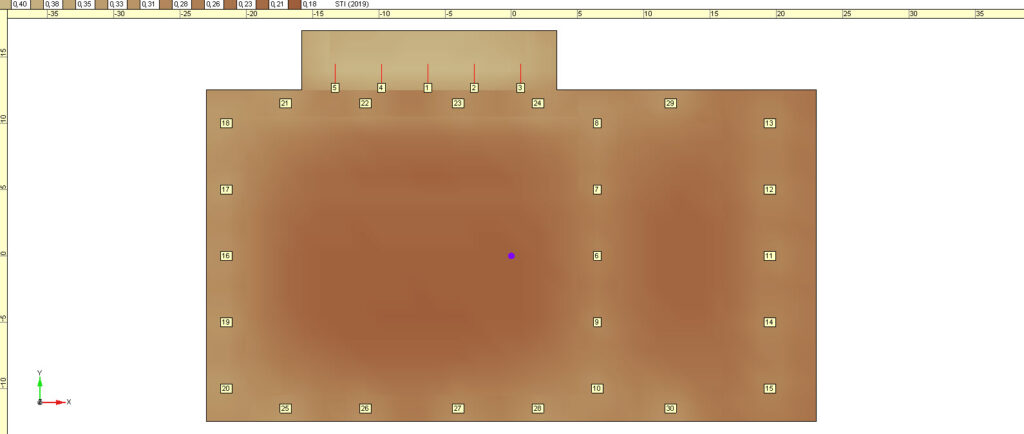
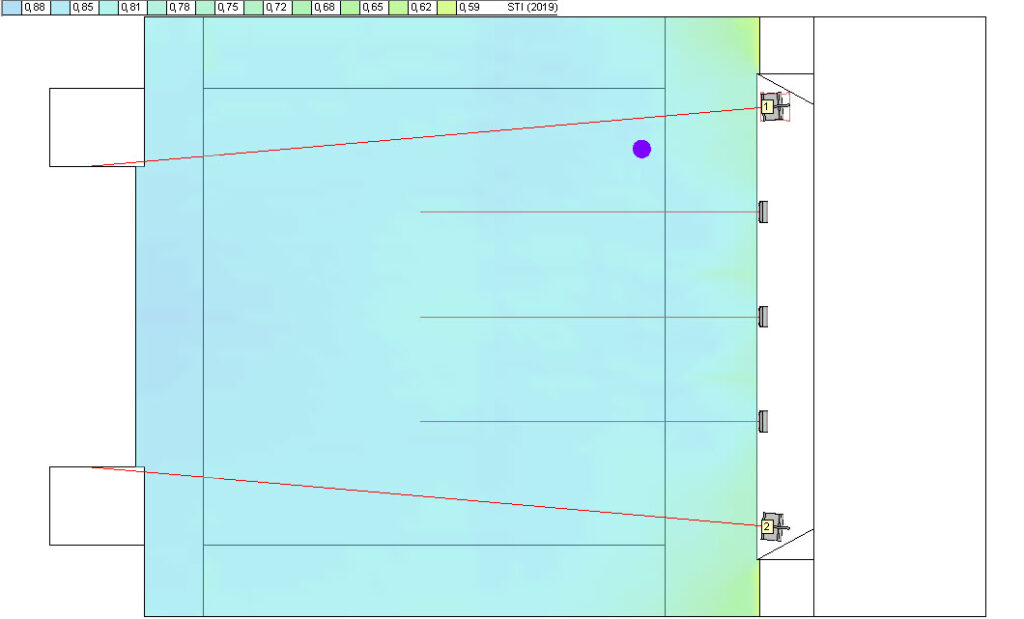
STI in practice
In sports venues, where crowd noise can be enormous and hard surfaces promote reverberation, high speech intelligibility is a key requirement, not just a comfort one. A properly designed public address system with a high STI value is the cornerstone of an emergency management and evacuation plan. Evacuation messages, instructions and warnings must be audible and understandable even in conditions of panic and turmoil. Having a public address system that provides this minimum is not only a matter of meeting standards, but more importantly a matter of responsibility for the lives and health of thousands of people.
Other audio systems necessary in a sports facility
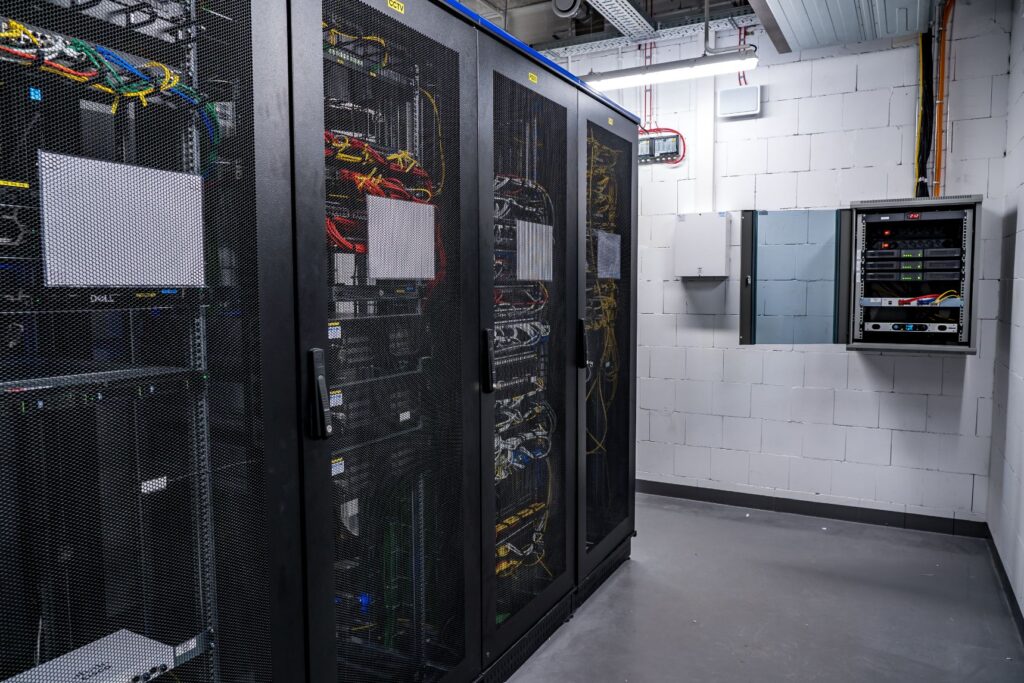
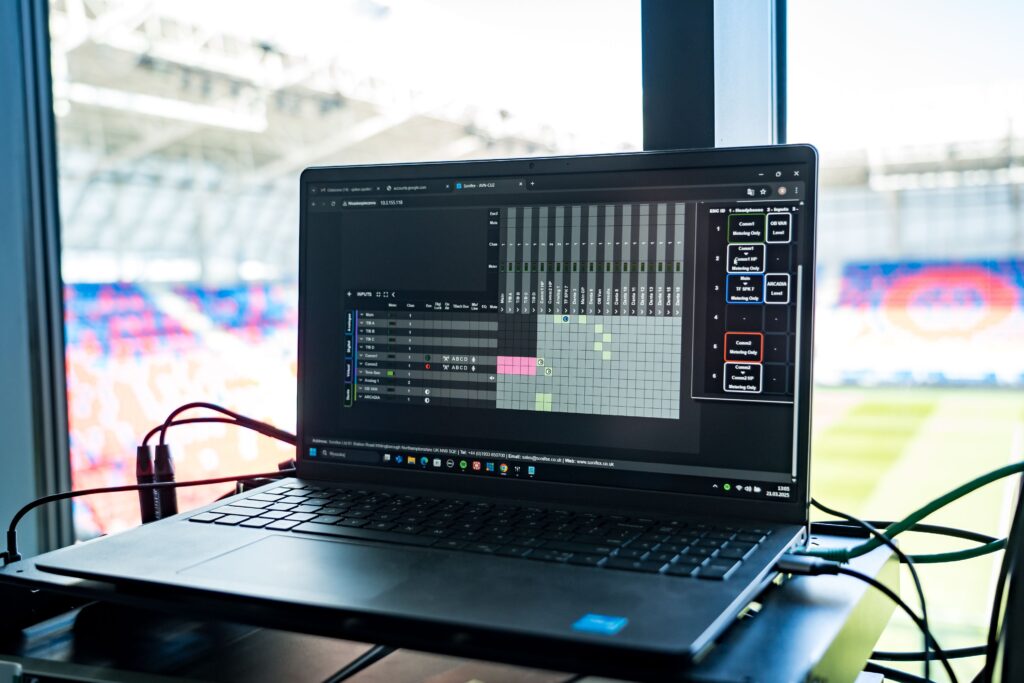
Intercom Systems: The Invisible Network for Operational Communications
An intercom system is more than just a talking device; it is an independent communication network, crucial to the daily operations and security of a facility. Intercoms enable quick and efficient communication between key personnel groups, such as security services, technical personnel, emergency responders, and the transmission truck. Unlike cell phones, which can be overloaded in the face of large numbers of users during an event, intercom systems provide a reliable communication channel that works even when other networks fail.
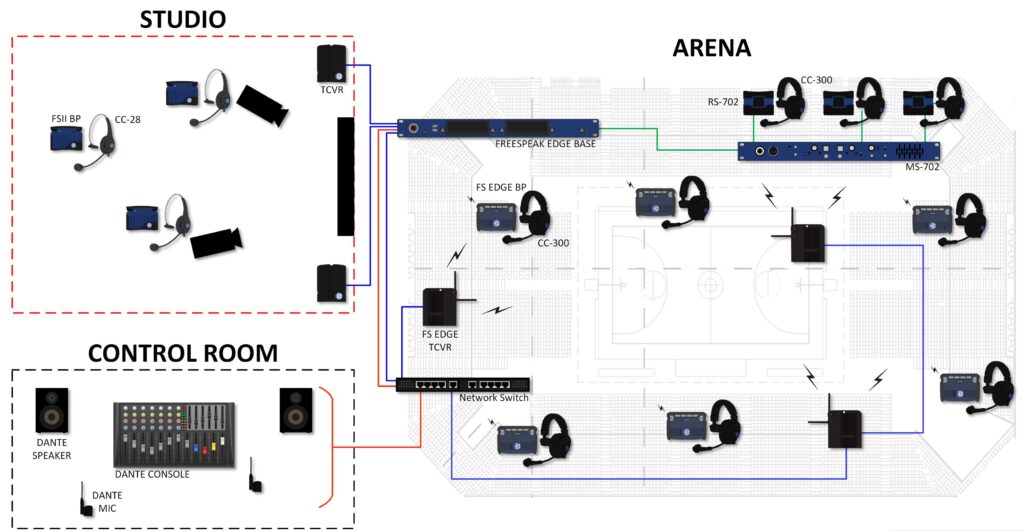
Intercom, often referred to colloquially as Clear-Com can be easily integrated with other systems, such as fire alarms, public address, reporters, and allows for immediate messaging to pagers or radios, which allows for alarm verification before deciding to evacuate and prevents unnecessary costs due to false alarms.
Interconnection Infrastructure for Transmission Vehicles (OB Vans) Remote Production
A modern sports venue must be attractive not only to the public, but also to the media. Broadcast vans (OB Vans) are mobile directors that make it possible to produce live broadcasts outside the television studio. In order to produce sports broadcasts smoothly and seamlessly, sports venues should be equipped with a permanent, downloadable infrastructure for sound and communication signals. The lack of such infrastructure forces teams to make time-consuming and costly temporary connections, making it difficult to organize sports events and media events.
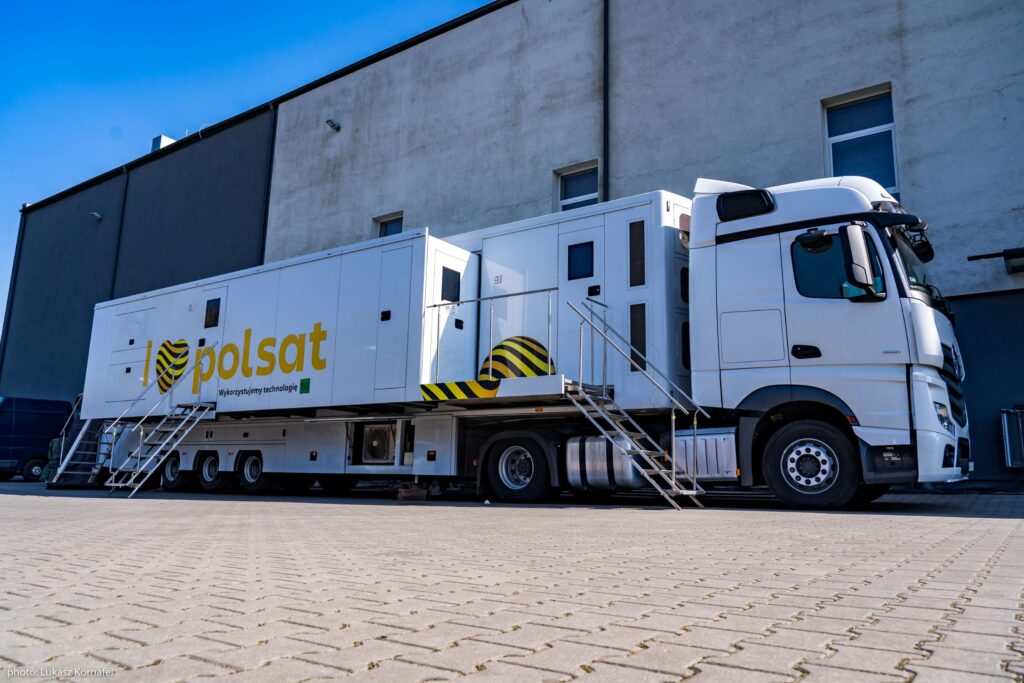
The necessary connection points include a variety of connectors for audio, video and intercom communications, and their location is crucial. Having such infrastructure is not only an operational convenience, but a strategic commercial asset that increases the value of the facility and its attractiveness to broadcasters, thereby generating additional revenue.
How about Remote Production?
Traditionally, an entire production team, including directors, sound operators, and technicians working on broadcast trucks, is on site for a sports event. In the case of Remote Production, cameras and microphones are installed at the stadium, but the signal from them is sent via fiber optics or other high-speed links to a central production center. It is there, in the comfort of the studio, that audio mixing, camera switching and footage editing take place, allowing for faster and more flexible production.
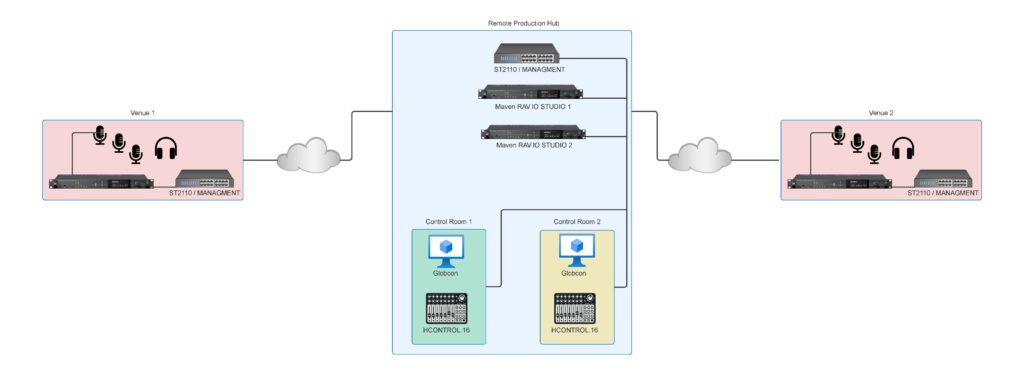
The main advantage of this technology is cost optimization i logistics. With most of the people and equipment not having to travel, TV stations can cover more events at once, and send smaller crews consisting only of camera operators and reporters to the site. Commercial Audio was the first company in Poland to introduce such a solution for one of its TV stations using equipment from the brand DirectOut, which in addition to the ability to use multiple audio formats and convert them to other audio formats which will be very useful in preparing the connection infrastructure, also offers solutions for remote production (remote production).
Why work with Commercial Audio ?
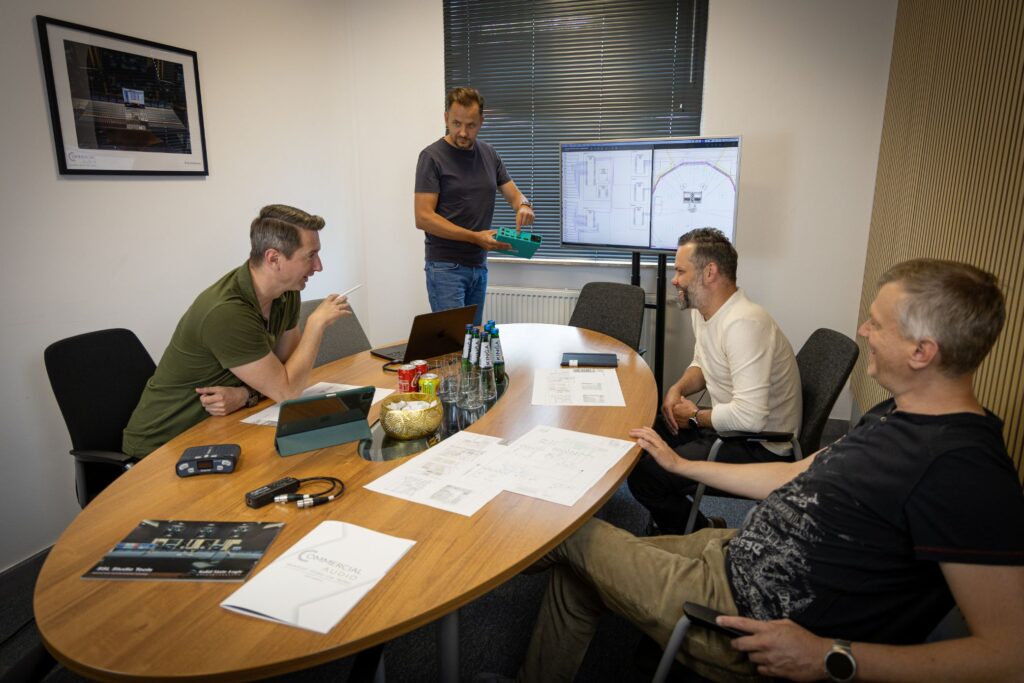
Hiring electroacoustics and AV system integration specialists from the earliest stages of a project is a strategic decision that minimizes risks and costs in the long run. As a company that offers the most proven intercom equipment, signal transmission and conversion tools, and sound systems, we not only take care of the proper selection of solutions, but also create key documents such as bills of quantities and cost estimates that form the basis for pricing and scheduling the work. Our experience allows us to avoid costly mistakes, which in the case of such complex installations can result in the need for costly reconstruction of the system after its commissioning. Working with us guarantees that the project will comply with the latest standards, be optimal in terms of cost and efficiency, and be tailored to the specific requirements of the facility.
Among others, our systems work in venues such as the Stadium of Light, Shanghai Stadium, Allianz Stadium (home of Juventus Football Club), Ithaca Arena Opole, O2 Arena, Porto Stadium and many others. Such prestigious venues testify to the effectiveness and reliability of dedicated solutions in real, demanding conditions. Choosing a cohesive ecosystem is an investment that ensures long-term performance, reliability and ease of maintenance, which is fundamental in the case of major sports venues.
Contact us to learn more:

Tomasz Nowicki
Bose Professional / Amadeus
+48 516 502 225
[email protected]
 Polski
  English
  Slovenčina
  Čeština