
Sound and Sensations - Pillars of a Modern Sports Facility
Projektowanie współczesnego obiektu sportowego, niezależnie od jego skali – czy to stadionu, wielofunkcyjnej areny, czy hali sportowej – wykracza daleko poza samą architekturę i funkcjonalność sportową. Nagłośnienie stadionu, oświetlenie, multimedia i komunikacja stanowią dziś fundamentalne filary, które decydują o sukcesie przedsięwzięcia. Nie chodzi już tylko o zapewnienie możliwości rozegrania meczu, ale o stworzenie przestrzeni, która dostarcza niezapomnianych wrażeń, gwarantuje najwyższy poziom bezpieczeństwa i sprawność operacyjną, a także maksymalizuje swoją wartość komercyjną. Nagłośnienie stadionu czy hali, w szczególności, pełni tu dwojaką rolę: jest kluczowym nośnikiem atmosfery, podnoszącym poziom emocji publiczności, ale przede wszystkim jest narzędziem bezpieczeństwa, które w sytuacji kryzysowej może uratować życie.
Specifics of Acoustics of Arenas, Stadiums, Playing Fields: Challenges of Unique Scale.
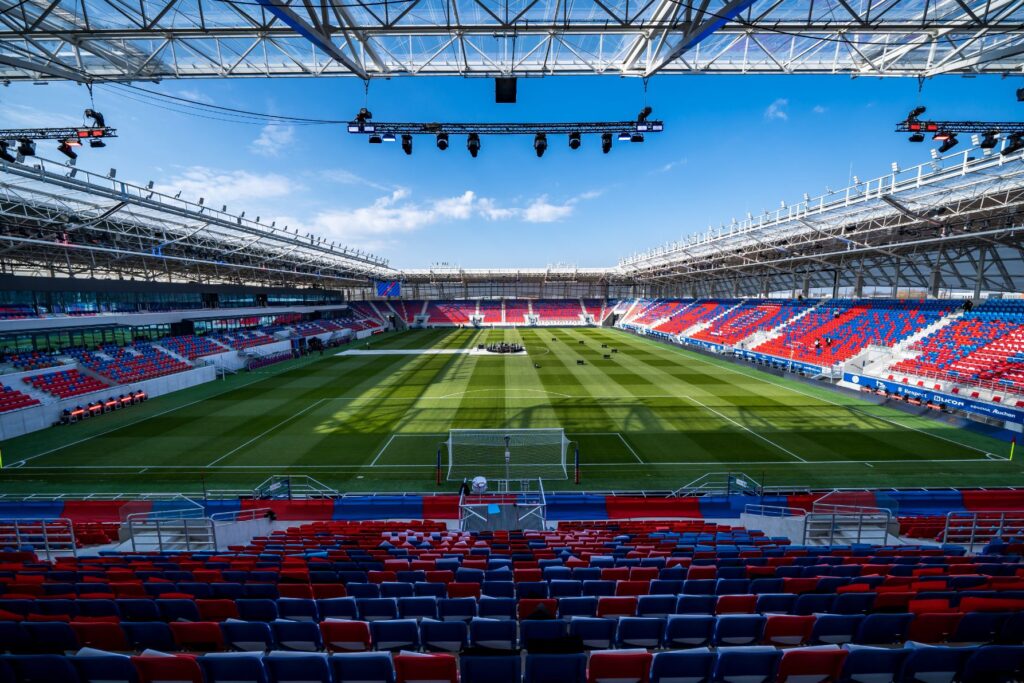
Nagłośnienie stadionu czy innego obiektu sportowego jest nierozerwalnie połączone z jego akustyką. Wielkie obiekty sportowe, takie jak stadiony i areny, stwarzają unikalne i skrajnie trudne wyzwania akustyczne. Ich konstrukcja, opierająca się na dużych, otwartych przestrzeniach i twardych powierzchniach, takich jak beton, metal czy szkło, jest z natury anty-akustyczna. Powoduje to nadmierne odbicia dźwięku, generując zjawiska takie jak długi czas pogłosu oraz echo. Pogłos, definiowany jako utrzymywanie się dźwięku w pomieszczeniu po ustaniu jego emisji, w takich warunkach jest znacznie wydłużony, co powoduje nakładanie się na siebie kolejnych słów i dźwięków. W rezultacie przekaz staje się „rozmyty” i niezrozumiały, co stanowi poważne zagrożenie dla skuteczności komunikatów, szczególnie tych alarmowych. Dodatkowo, w tak dużej skali, dźwięk rozchodzi się nierównomiernie, co prowadzi do powstawania „martwych stref”, gdzie dźwięk jest ledwo słyszalny lub obszarów z nadmiernym natężeniem, które mogą być niekomfortowe dla słuchaczy.
To meet these challenges, advanced solutions are required. A key element is the use of sound-absorbing materials that are suspended from the arena ceiling and effectively reduce reverberation and noise. The market offers specialized panels, such as Signature Baffles and EchoFelt+ Baffles, which withstand the wear and tear typical of dynamic sports environments thanks to their durability. What's more, for multi-purpose facilities that need to accommodate ice competitions, for example, it's crucial to choose moisture-resistant materials. The use of acoustic panels, such as Megasorber, on walls and ceilings is one of the most effective and economical ways to control reverberation on such a large scale.
The Role of Professional Acoustic Analysis and Simulation in Sports Facilities
Given the enormous scale and complexity of acoustic challenges, the design process cannot rely on intuition or experience based on smaller sites. A key step is the professional preparation of an electroacoustic project, which involves a series of steps, starting with defining the objectives and collecting the necessary materials, such as technical drawings and floor plans. Commercial Audio, offers comprehensive preparation of such projects, based on cooperation with the best designers.
Computer simulations are an indispensable tool in this process. Thanks to them, it is possible to check the acoustic qualities of a facility even before construction begins. For example, the Bose Professional Auditioner III Playback System allows you to hear what the sound system will sound like in a given room before even a single speaker is installed. Such simulation allows you to accurately determine the parameters and placement of equipment, minimizing the risk of mistakes and the need for costly corrections during the execution phase. Investing in simulation at an early stage is not only a matter of technical precision, but also a strategic exercise in risk and financial management. Since the costs of changes and adaptations in such large facilities are astronomical, the ability to identify potential problems early and optimize technical solutions translates into real savings across the project. Ensuring that a project meets expectations and standards is not the result of luck, but of precise, data-driven analysis, which is key to the success of any investment.
The purpose of a public address system: Security vs. Entertainment
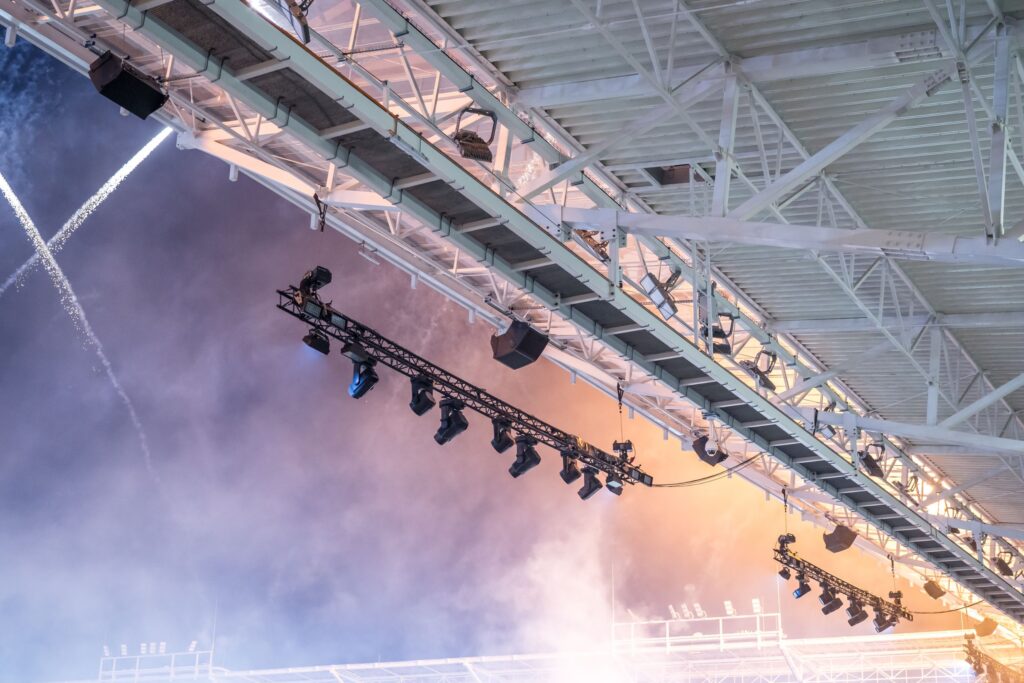
Nagłośnienie stadionu czy innego obiektu sportowego musi spełniać dwa, z pozoru sprzeczne, cele. Z jednej strony, jego podstawowym zadaniem jest zapewnienie idealnej zrozumiałości mowy dla komunikatów bezpieczeństwa, ogłoszeń i instrukcji ewakuacyjnych. W warunkach paniki, gdzie hałas tła może być ekstremalnie wysoki, każdy komunikat musi być krystalicznie czysty. Z drugiej strony, system musi być zdolny do dostarczania wysokiej jakości, dynamicznego dźwięku muzyki i efektów specjalnych, które podnoszą poziom energii i budują atmosferę. Wymaga to zdolności do generowania wysokiego ciśnienia akustycznego (SPL) z mocnym komponentem basowym, co jest kluczowe dla wrażeń podczas występów muzycznych. Wyzwanie projektowe polega na stworzeniu systemu, który jest zarówno precyzyjny i klarowny dla mowy, jak i potężny i dynamiczny dla muzyki, bez kompromisów w żadnym z tych obszarów. Dlatego zaledwie kilka firm na świecie stworzyło systemy nagłośnieniowe dedykowane dla obiektów sportowych. Jednym z nich jest Bose Professional ArenaMatch Series.
Ensuring Proper Sound Coverage: Challenges and Solutions
Kluczowym elementem świadczącym o tym, że nagłośnienie stadionu zostało prawidłowo zaprojektowane jest zapewnienie jednolitego i spójnego pokrycia dźwiękiem w całym obiekcie. Oznacza to, że każdy kibic, niezależnie od tego, czy siedzi blisko płyty boiska, czy na najwyższych trybunach, powinien doświadczać tej samej jakości dźwięku i podobnej głośności. Pozwala to na stworzenie spójnego i sprawiedliwego doświadczenia dla wszystkich uczestników wydarzenia.
Jednym z częstych wyzwań, jeśli chodzi o nagłośnienie stadionu, zwłaszcza na otwartych obiektach, jest „ucieczka dźwięku” poza teren obiektu. Dźwięk, który rozchodzi się bez kontroli, może być uciążliwy dla mieszkańców okolicznych osiedli. Skuteczna strategia projektowa obejmuje precyzyjne kierunkowanie głośników z dużymi tubami, tak aby ich emisja była skoncentrowana na obszarze trybun. Dodatkowo, głośniki powinny być montowane z odpowiednim kątem nachylenia co pomaga utrzymać dźwięk wewnątrz stadionu, minimalizując jego emisję w kierunku horyzontu i poza obiekt. W systemach nagłośnieniowych oferowanych przez Commercial Audio ma zastosowanie technologia DeltaQ, która zapewnia wyjątkowe połączenie mocy, precyzji, pokrycia i kontroli. Są one częścią kompletnego, zintegrowanego ekosystemu, wspieranego przez komplementarne produkty, takie jak wzmacniacze Bose Professional PowerMatch i procesory ControlSpace DSP.
STI key parameter. What is it and why is it measurable?
Jeśli chodzi o nagłośnienie stadionu, najważniejszym parametrem jest STI. Indeks Przejrzystości Mowy (STI – Speech Transmission Index) jest znormalizowanym, obiektywnym i bezwymiarowym parametrem, zdefiniowanym przez Międzynarodową Komisję Elektrotechniczną (IEC), służącym do oceny zrozumiałości mowy w danej przestrzeni. Został on opracowany w latach 70. XX wieku w celu obiektywnej oceny kanałów transmisyjnych.
STI is based on the concept of modulation transfer function (MTF, Modulation Transfer Function), which measures to what extent the modulations of a speech signal are preserved during transmission from the source to the receiver. Human speech, taken as a carrier signal at a sports venue, is modulated by low frequencies, which are responsible for the sounds formed by the mouth and tongue. Systems that degrade these modulations reduce the intelligibility of the message. STI, taking values from 0 (very poor intelligibility) to 1 (excellent intelligibility), is a precise predictor of the effect that the transmission channel (including room acoustics, background noise and equipment) has on speech intelligibility. Importantly, it is a physical measurement, independent of language, which makes it a universal assessment tool.
Speech intelligibility at the Stadium vs. Security
The STI value is a key indicator of the quality of a public address system, especially in the context of emergency messages and announcements. The following table, based on IEC 60268-16, translates STI numerical values into intelligible quality grades and percentage chance of understanding words.
| STI value | Quality (according to IEC 60268-16) | Sentence Comprehension (%) | Typical application |
| < 0.3 | bad | 0-89 | - |
| 0.3-0.45 | weak | 89-92 | - |
| 0.45-0.6 | sufficient | 92-95 | Noisy and crowded public spaces, shopping malls |
| 0.6-0.75 | goods | 95-96 | Lecture halls, concert halls, theaters, sports facilities |
| > 0.75 | excellent | 96-100 | Recording studios, professional auditoriums, courts |
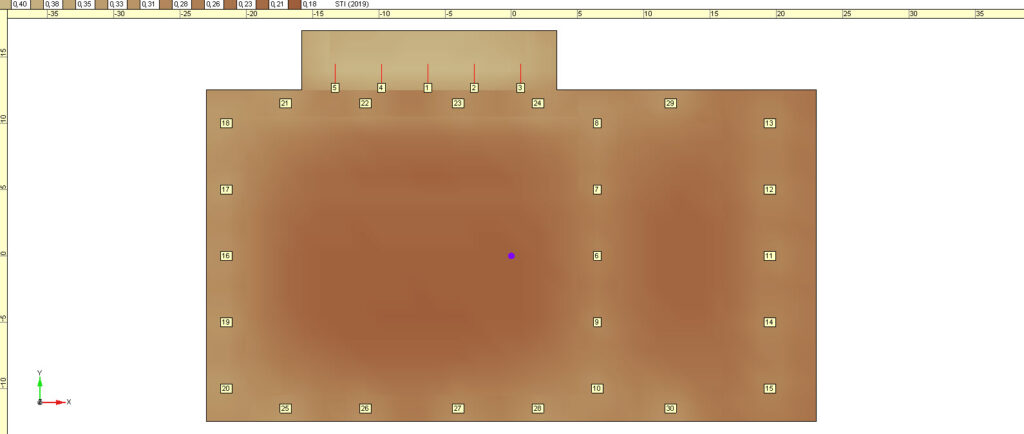
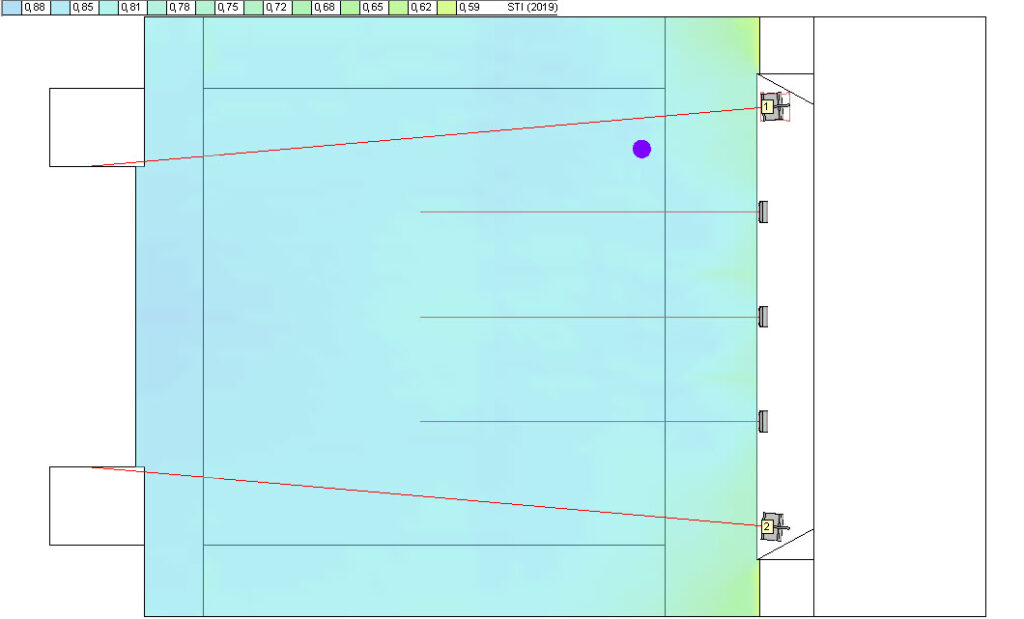
The above table is a fundamental guideline for decision makers, as it transforms an abstract technical parameter into concrete, measurable performance indicators. A value of 0.60-0.75 is considered good. In the context of safety, a high STI value, translating into nearly 100 percent word intelligibility, is essential for evacuation systems. That's why, as a company offering audio solutions for stadiums, playing fields, sports halls, we take care to provide the final STI measurement at the design execution stage through a software simulation of the public address system in question. A detailed description of the design process and its elements is described HERE.
Factors affecting STIs
Speech intelligibility, and thus the STI value, is affected by a number of factors:
- Reverberation: Excessive reverberation causes signals to overlap, which „blurs” speech and lowers STI.
- Background noise: Noise, generated by the audience, ventilation systems or other sources, masks the speech signal, making it difficult to perceive.
- Echo: Sound reflections from distant hard surfaces, which reach the listener with a delay of more than 100 ms, significantly reduce intelligibility.
STI in practice
W obiektach sportowych, gdzie hałas tłumu bywa ogromny, a twarde powierzchnie sprzyjają pogłosowi, wysoka zrozumiałość mowy jest wymogiem kluczowym, nie tylko komfortem. Prawidłowo zaprojektowany system nagłośnienia, o wysokiej wartości STI, jest podstawą planu zarządzania kryzysowego i ewakuacji. Komunikaty ewakuacyjne, instrukcje i ostrzeżenia muszą być słyszalne i zrozumiałe nawet w warunkach paniki i zgiełku. Nagłośnienie stadionu, które zapewnia to minimum, to nie tylko kwestia spełnienia norm, ale przede wszystkim odpowiedzialności za życie i zdrowie tysięcy ludzi.
Other audio systems necessary in a sports facility
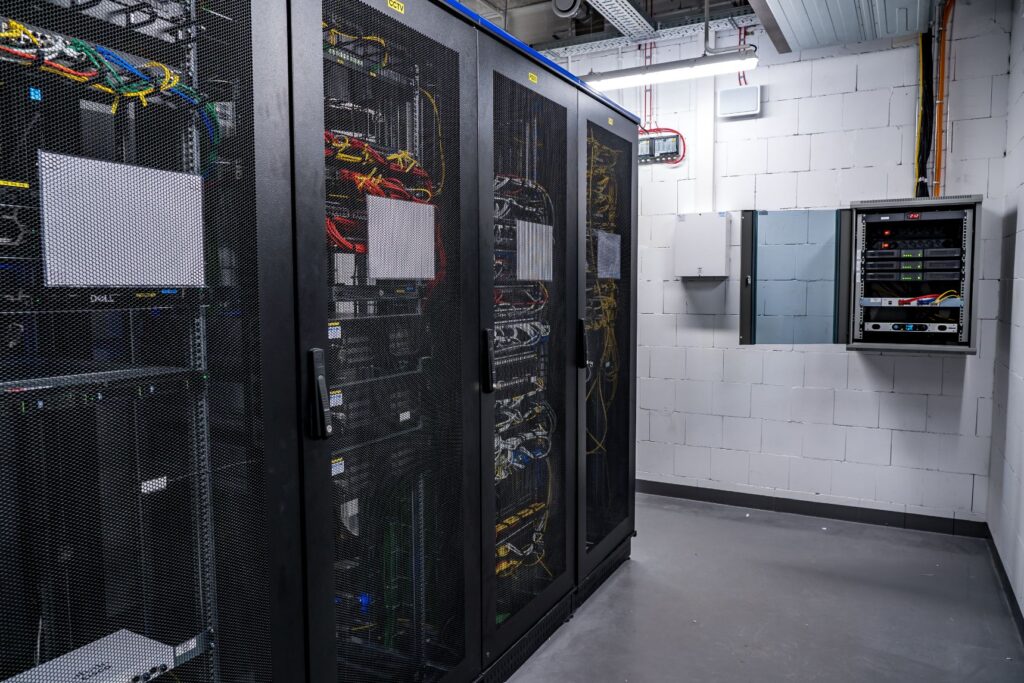
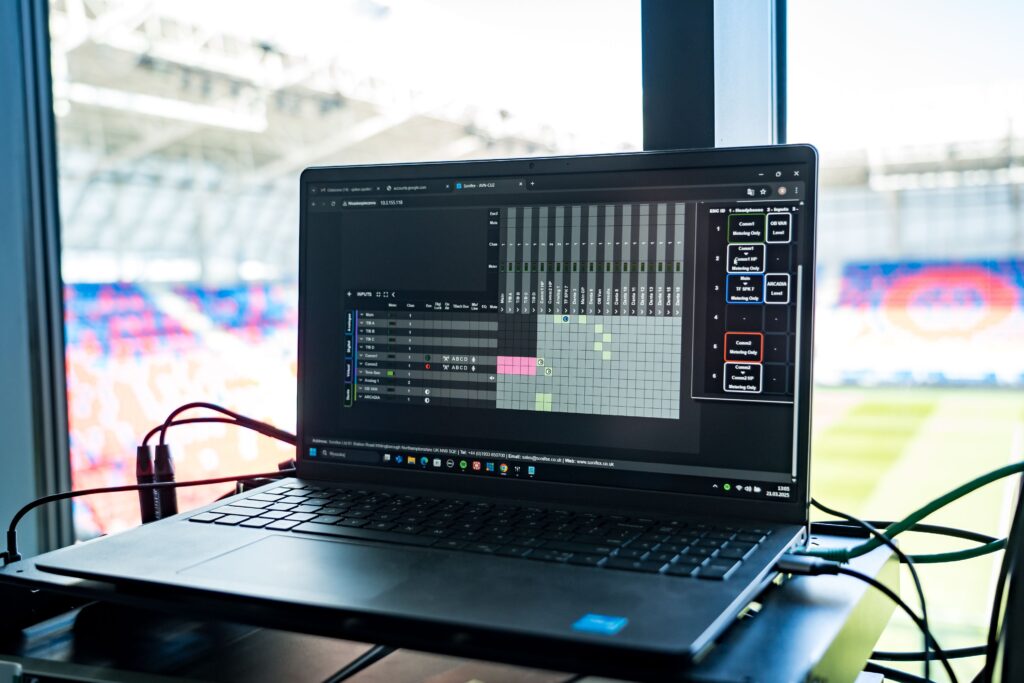
Intercom Systems: The Invisible Network for Operational Communications
An intercom system is more than just a talking device; it is an independent communication network, crucial to the daily operations and security of a facility. Intercoms enable quick and efficient communication between key personnel groups, such as security services, technical personnel, emergency responders, and the transmission truck. Unlike cell phones, which can be overloaded in the face of large numbers of users during an event, intercom systems provide a reliable communication channel that works even when other networks fail.
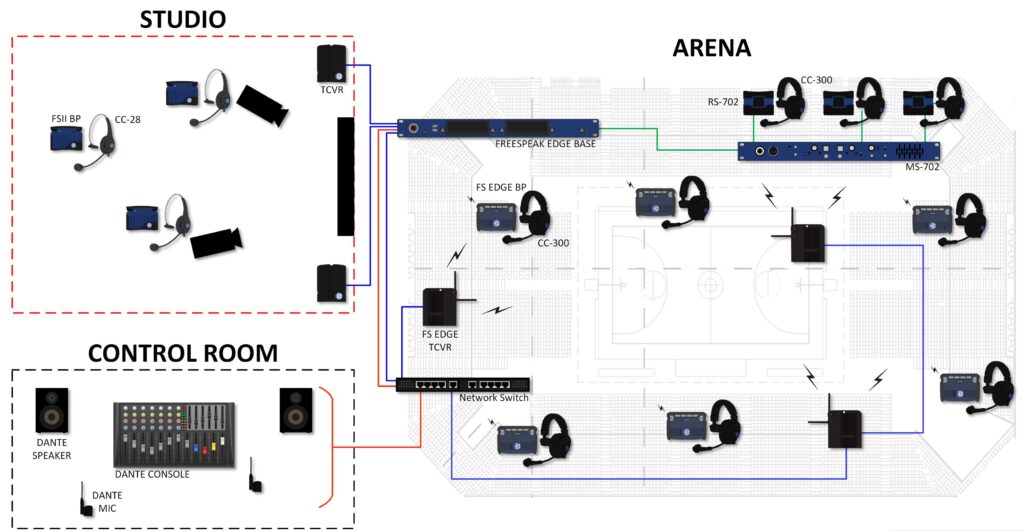
Intercom, often referred to colloquially as Clear-Com can be easily integrated with other systems, such as fire alarms, public address, reporters, and allows for immediate messaging to pagers or radios, which allows for alarm verification before deciding to evacuate and prevents unnecessary costs due to false alarms.
Interconnection Infrastructure for Transmission Vehicles (OB Vans) Remote Production
A modern sports venue must be attractive not only to the public, but also to the media. Broadcast vans (OB Vans) are mobile directors that make it possible to produce live broadcasts outside the television studio. In order to produce sports broadcasts smoothly and seamlessly, sports venues should be equipped with a permanent, downloadable infrastructure for sound and communication signals. The lack of such infrastructure forces teams to make time-consuming and costly temporary connections, making it difficult to organize sports events and media events.
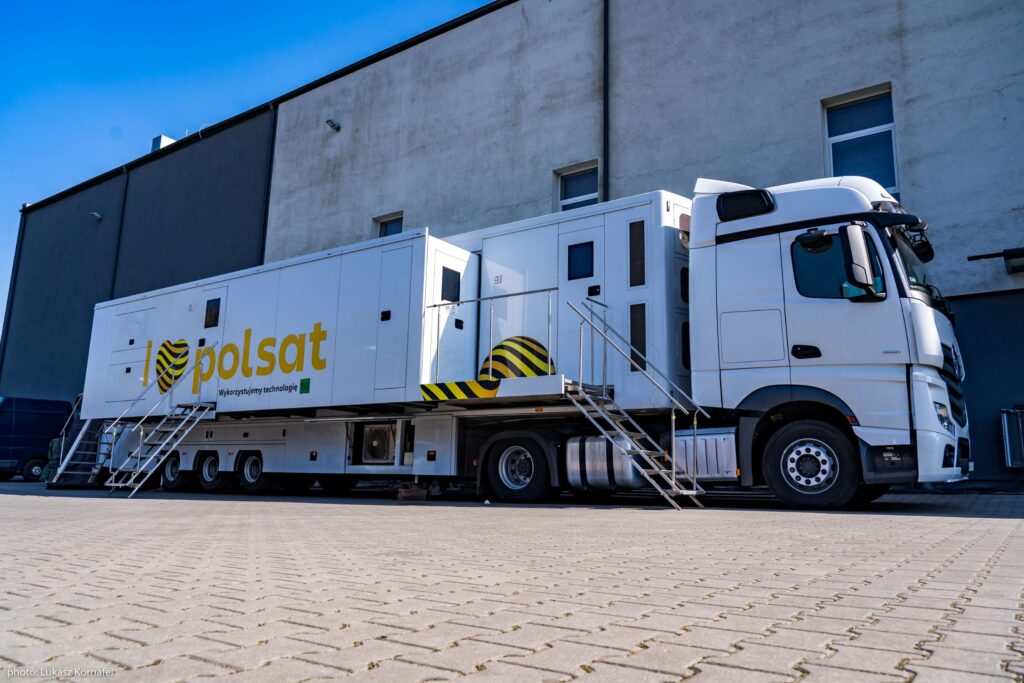
The necessary connection points include a variety of connectors for audio, video and intercom communications, and their location is crucial. Having such infrastructure is not only an operational convenience, but a strategic commercial asset that increases the value of the facility and its attractiveness to broadcasters, thereby generating additional revenue.
How about Remote Production?
Traditionally, an entire production team, including directors, sound operators, and technicians working on broadcast trucks, is on site for a sports event. In the case of Remote Production, cameras and microphones are installed at the stadium, but the signal from them is sent via fiber optics or other high-speed links to a central production center. It is there, in the comfort of the studio, that audio mixing, camera switching and footage editing take place, allowing for faster and more flexible production.
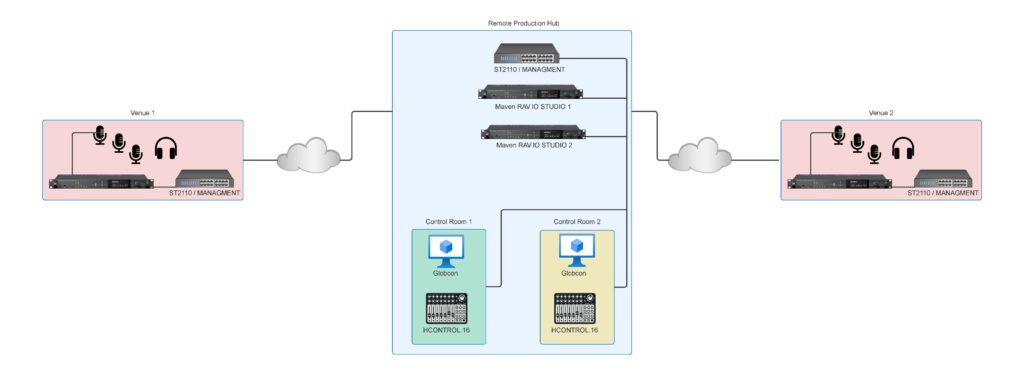
The main advantage of this technology is cost optimization i logistics. With most of the people and equipment not having to travel, TV stations can cover more events at once, and send smaller crews consisting only of camera operators and reporters to the site. Commercial Audio was the first company in Poland to introduce such a solution for one of its TV stations using equipment from the brand DirectOut, which in addition to the ability to use multiple audio formats and convert them to other audio formats which will be very useful in preparing the connection infrastructure, also offers solutions for remote production (remote production).
Why work with Commercial Audio ?
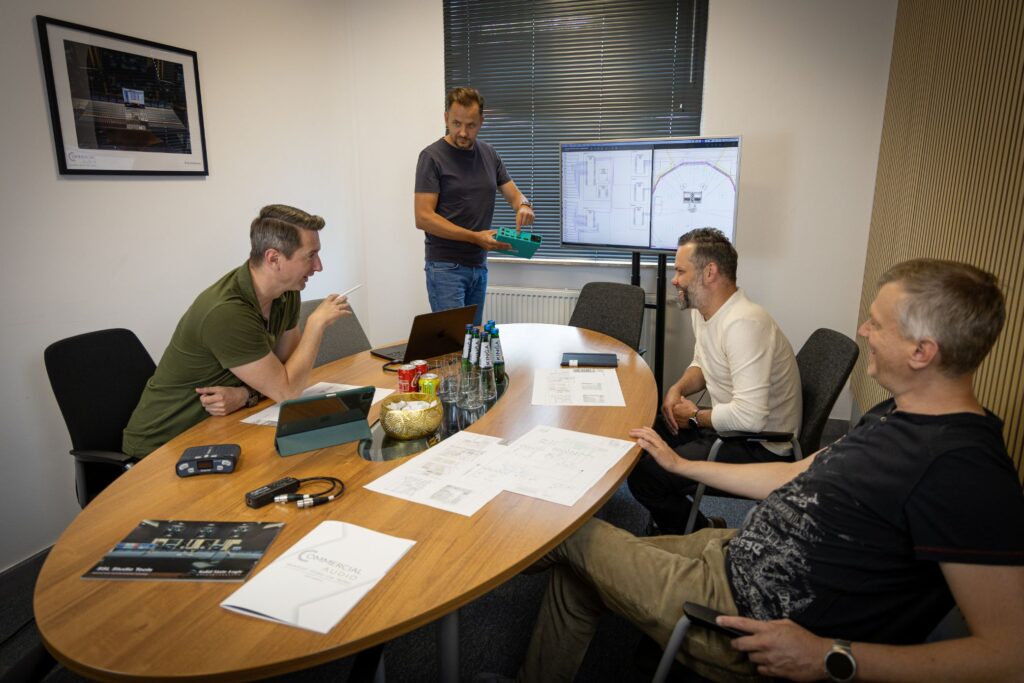
Hiring electroacoustics and AV system integration specialists from the earliest stages of a project is a strategic decision that minimizes risks and costs in the long run. As a company that offers the most proven intercom equipment, signal transmission and conversion tools, and sound systems, we not only take care of the proper selection of solutions, but also create key documents such as bills of quantities and cost estimates that form the basis for pricing and scheduling the work. Our experience allows us to avoid costly mistakes, which in the case of such complex installations can result in the need for costly reconstruction of the system after its commissioning. Working with us guarantees that the project will comply with the latest standards, be optimal in terms of cost and efficiency, and be tailored to the specific requirements of the facility.
Among others, our systems work in venues such as the Stadium of Light, Shanghai Stadium, Allianz Stadium (home of Juventus Football Club), Ithaca Arena Opole, O2 Arena, Porto Stadium and many others. Such prestigious venues testify to the effectiveness and reliability of dedicated solutions in real, demanding conditions. Choosing a cohesive ecosystem is an investment that ensures long-term performance, reliability and ease of maintenance, which is fundamental in the case of major sports venues.
Contact us to learn more:

Tomasz Nowicki
Bose Professional / Amadeus
+48 516 502 225
[email protected]
 Polski
  English
  Slovenčina
  Čeština