
SOLID STATE LOGIC SYSTEM T CLOUD
Solid State Logic System T Cloud
T System Virtual Engine

Cloud-based, or virtual audio processing in the cloud, is another significant step forward in audio technology and production. SSL offers even greater audio system scalability and flexibility, as well as new and unprecedented operational benefits for broadcasters. It is also a key element in the development of remote and distributed production models.
Solid State Logic, listening to the needs of the world's largest broadcasters, has worked to better understand production processes using cloud-based virtual audio processing and its control. This has led to the preparation of several Proof-of-Concept (PoC) events, including test and live productions, and their successful implementation has proven the robustness of System T's virtual DSP processing and its ability to deliver top-quality audio to broadcasters.
The T system offers truly scalable processing and audio control. The distributed production model allows any combination of control surfaces to be used, ensuring that all operators and engineers are comfortable.

Virtual audio processing
Using patented Optimal Core Processing (OCP) technology on x86 processors, SSL virtualizes the System T Tempest Engine DSP. The cloud-based engine runs in Linux environment, optimized for bandwidth and low latency, providing real-time processing of virtual mixer audio signals. The solution uses cloud-compatible, software-defined transport protocols across DSP I/O providing an even more flexible connection model. Shared channels, signal distribution and monitoring can be handled through various interfaces, making it easy to meet the specific requirements of each job.
- AWS Cloud with the cloud version of the Virtual Tempest DSP engine.
- AWS Cloud with the cloud version of the Tempest Control application.
- 256 processing paths.
- Immersive audio formats up to 7.1.4 with 9.1.6 monitoring.
- Cloud audio transport and routing Dante Connect .
- 256x256 Dante Connect channels supporting Virtual Tempest Engine.
- Possibility of conversion to NDI.
- Any location of realization stations using hardware and software
- Control of audio production from multiple locations simultaneously

VTE implementation
The software subscription provides 256 audio processing tracks in the cloud. VTE is deployed with a TCA instance in the cloud to control the software. These instances are fully remotely controlled from any System T or TCA control surface and physical set of faders . VTE uses Audinate's Dante Connect in a virtual DSP to provide direct integration and routing of 256 inputs and 256 outputs in System T Cloud. Dante audio routing controls are managed directly from the user interface, then stored and referenced via a showfile. Users gain the ability to quickly define, configure and deploy cloud-based Dante audio solutions with System T Cloud. Dante Connect provides synchronous audio transport and full channel-by-channel audio routing between System T Cloud and any other Dante Connect instance or local Dante hardware.
Distributed and decentralized production
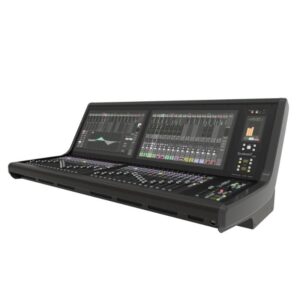
The image below shows an example of a distributed production model using virtualized processing, controlled via the S500 System T large-format console and the virtualized Tempest Control App. A unique feature of the System T is the ability to use any combination of control surfaces, both hardware and virtual, throughout the system.
Audio sources are captured at the primary location using SSL Network I/O and a small interface at location B. Channels from both locations are sent to a virtual Tempest DSP engine running in the AWS cloud. Control is also facilitated by a virtual instance of the Tempest Control App. Dante Connect is responsible for transporting and routing audio in the cloud. The T System's advanced Dante integration allows routing and control to be recorded within the console's showfile. Low-latency signal processing in the cloud is controlled via any System T control surface or TCA instance in the main director, with simultaneous expansion to additional remote locations as shown in the position of a second implementer using the Tempest Control App with a physical Fader Tile attenuator layer.

 Polski
  English
  Slovenčina
  Čeština