Whether you're handling sound in the radio studio, on TV or on a broadcast truck or for field recordings, we have solutions for anyone handling sound in the broadcaster. Leading radio and television stations use the solutions offered by our company; Solid State Logic, ATC Loudspeakers or Clear-Com. We offer a range of professional audio transmission and production and communication solutions for broadcast. We have equipped many recording studios and sound and broadcast trucks. Always with attention to quality and user convenience.
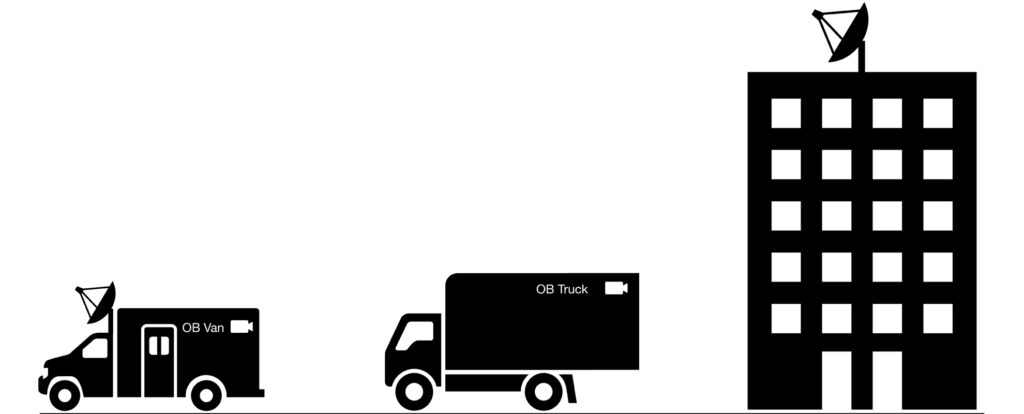
What does the term Broadcast mean ?
The term „broadcast” refers to the transmission of a message or information to a large group of recipients or many recipients simultaneously.
In the context of media, broadcasting is the distribution of audio or video content to a wide audience, usually via radio, television or the Internet. Broadcasting allows content producers to reach a large number of people at once, without the need for individual communication.
In a sports context, the term „broadcast” refers to the televised or streamed coverage of a live event, such as a soccer or basketball game, which is broadcast to viewers around the world.
In summary, the term „broadcast” can refer to a wide range of methods of communicating information or content to a wide audience, often using electronic or digital media.
Professional production for broadcasting is done with the necessary tools such as microphones, audio consoles, cameras, intercom systems, signal processors signal routers.
Communication during transmission, or INTERCOM.
An intercom system is a communication system that allows members of a production team to communicate with each other during a live broadcast or recording.
An intercom system typically consists of a central control panel, called a matrix, and a set of interconnected communication devices, such as headsets or communication panels. An intercom system may have a matrix that allows members of a production team to talk to each other on private channels, and to communicate with other departments, such as lighting or sound, on shared or isolated channels.
An intercom is an essential tool for efficient communication during a broadcast or live production. Intercom devices allow producers, directors, camera operators and other crew members to coordinate their activities and respond quickly to changes or problems during the work.
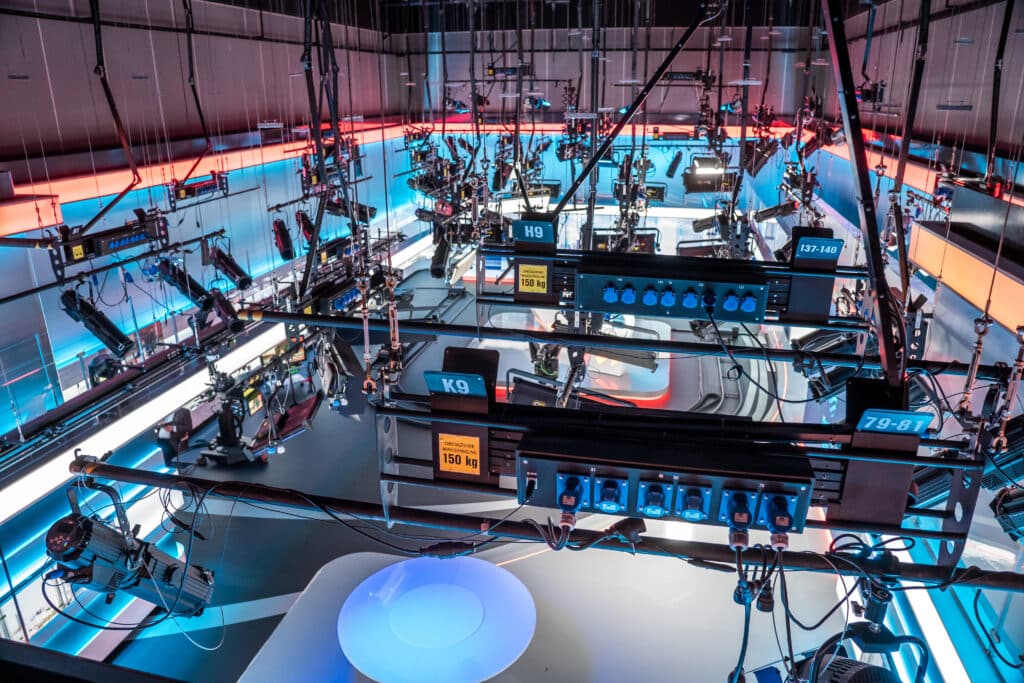
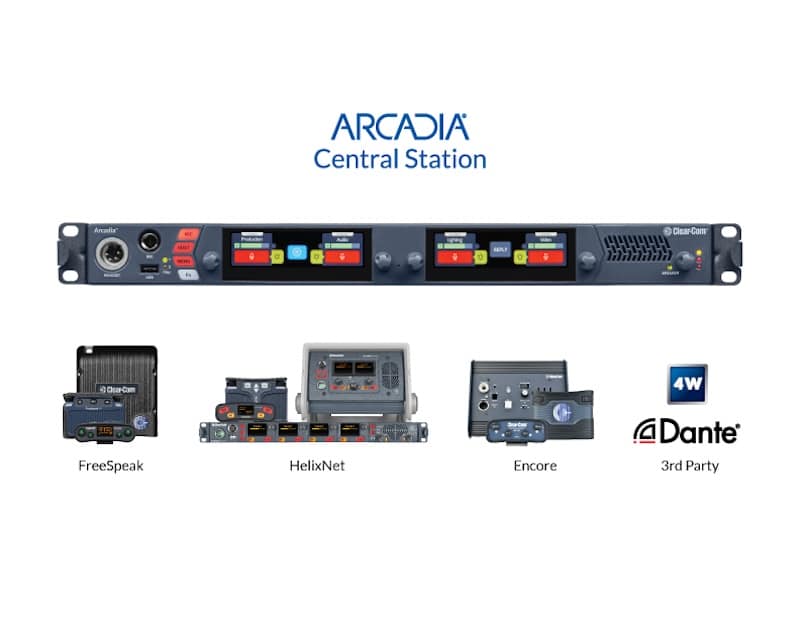
Intercom systems such as Clear-Com Arcadia also provide producers and directors with a way to communicate with artists on the air so that the audience cannot hear their conversation. This allows the production team to give directions or feedback to the artist or presenter without disrupting the broadcast.
Intercom systems can operate in the analog or digital AoIP domains. They are a key tool in the broadcast industry, helping to ensure smooth and efficient communication between the production team and enabling the creation of high-quality professional broadcasts.
Audio Over IP Technology for Broadcast.
Consideration of AoIP technology brings both confusion and delight to mind. It is known that different applications require specific solutions. So is there a solution that combines standards and incorporates current AoIP technologies with all the benefits ?
AoIP technology and transmission standards.
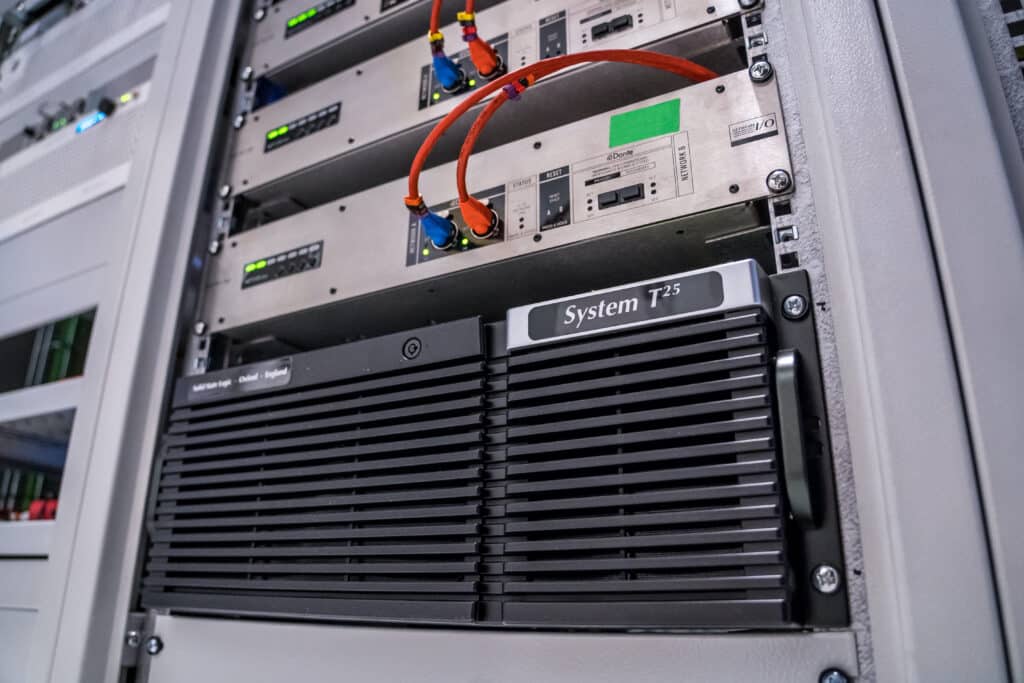
The SSL System T uses Audinate's Dante technology, which includes a Dante API that manages audio routing for SSL I/O devices and more than 2,000 third-party AoIP products. All directly from the console, including automatic device discovery (automatic discovery). The exact same hardware interfaces in the Tempest T25 and T80 engines and I/O stageboxes simultaneously support Dante and AES67 or ST 2110-30 standards - ensuring the broadest possible interoperability.
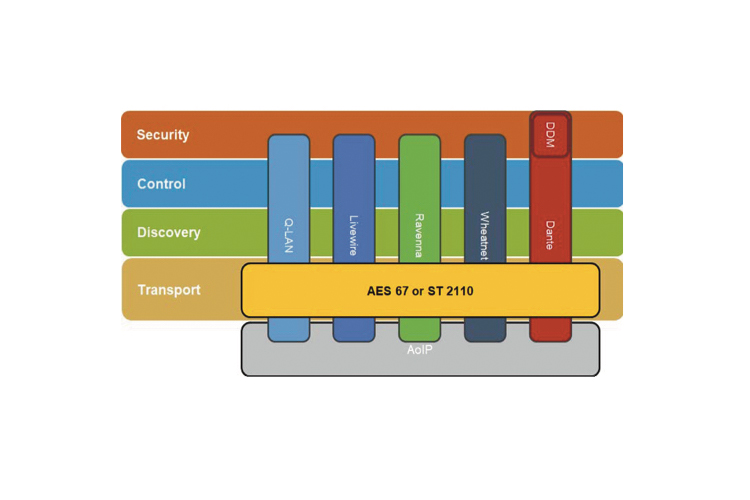
AoIP standards.
„Media over IP” systems can be divided into layers. In each layer, different standards perform different functions. At the network level, these standards are managed by the IEEE and IETF. At the broadcaster, the SMPTE and AES standards, as well as the newer AMWA specifications, were developed for media-specific network requirements. It is common to use standards or technology packages for other standards (ST 2110 uses RTP, NMOS IS-04 uses mDNS and/or DNS-SD, Dante uses mDNS and DNS-SD).
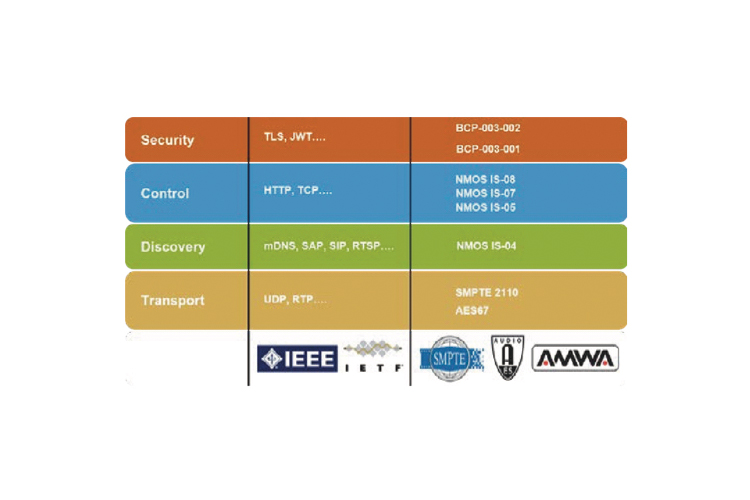
Safety at work with IP Audio
The most interesting thing about Media over IP technology is that everything can be „seen” through everything, and the communication options are virtually unlimited. At the same time, this is a rather big disadvantage....
Audinate's Dante Domain Manager provides a security layer for Dante technology. Dante Domain Manager (DDM) acts as an authorization server that allows customers to route and access devices to make changes. Dante Controller is a routing client that uses the Dante API. The software in System T S300, S500 and TCR is also such a client. When thinking about any IT system, security, functionality and ease of use can be considered a set of things of absolute importance. Changing any of these three factors simultaneously affects the others.
There are many ways to use DDM with Dante devices. When planning to use DDM in a given IP installation, it is best to break down the individual components into layers.
Solid State Logic has launched many T-Systems around the world supporting Dante networks without Dante Domain Manager. Depending on your requirements, you can manage Dante network security at the physical and/or network level.
Audio system engineering
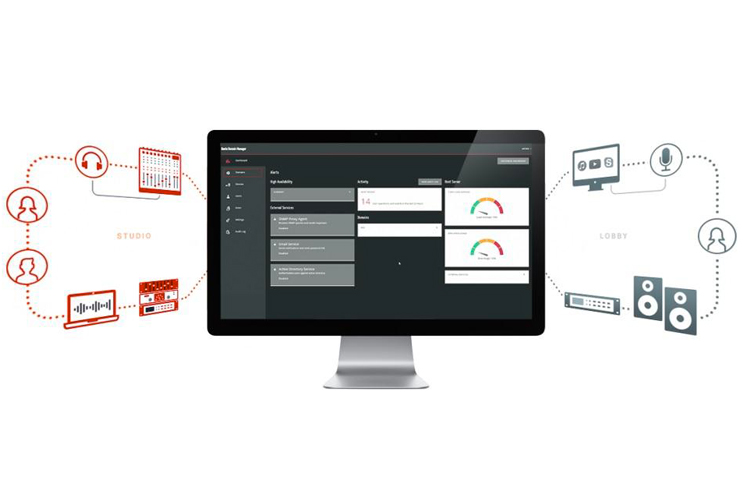
Thinking about user requirements, it is worth considering who will perform audio routing in a team consisting of video and audio departments. Of course, there are different needs, but this can usually be divided into audio routing performed by the audio console operator and that controlled by other personnel, such as the cart or studio engineer, usually using a routing management system.
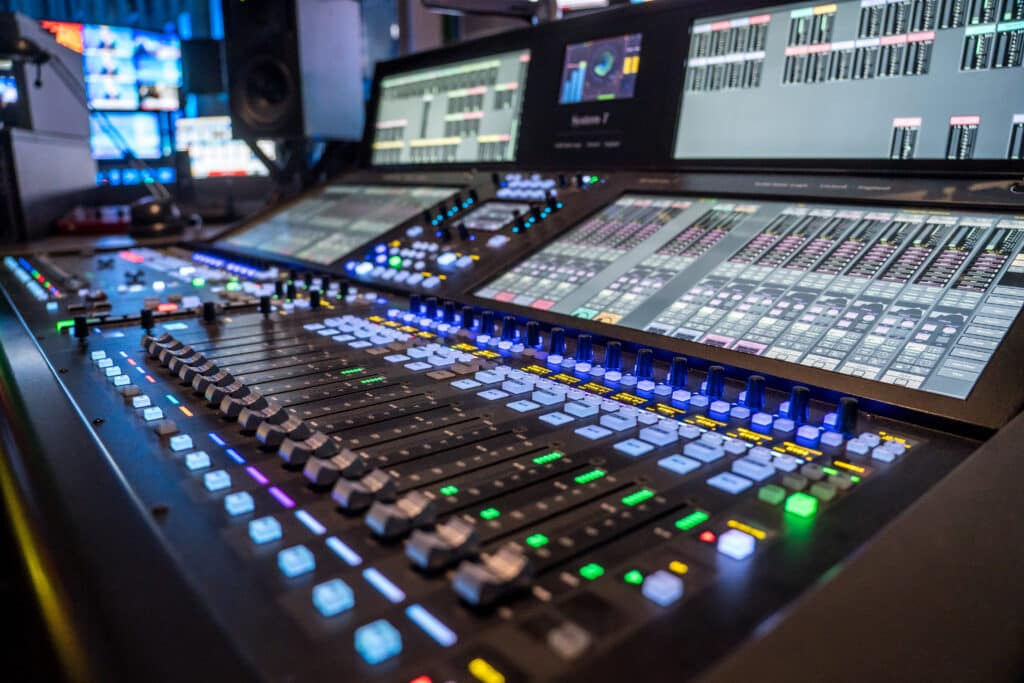
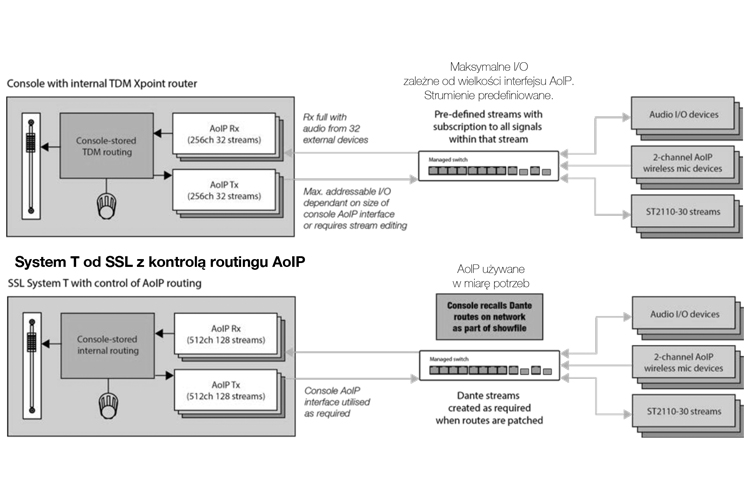
Broadcast console routing-including connecting microphones or stageboxes to processing channels-is stored in the console's recallable settings (showfile). To allow users more flexible and forward-looking installations, SSL System T can also be a router that uses the same set of technologies to send and receive AES67 and ST 2110-30 streams and AoIP Dante.
The ability to both route audio on the console and relay the broader infrastructure performed on the switches, using both AoIP technology and transport standards, eliminates the dependence on the TDM console router. It also eliminates the need for a hardware shuffer and interconnect nodes, which are essentially TDM routers.
Would you like to learn more about audio and communication solutions for broadcast ?
Welcome to the CONTACT. We will be happy to answer your questions.
 Polski
  English
  Slovenčina
  Čeština